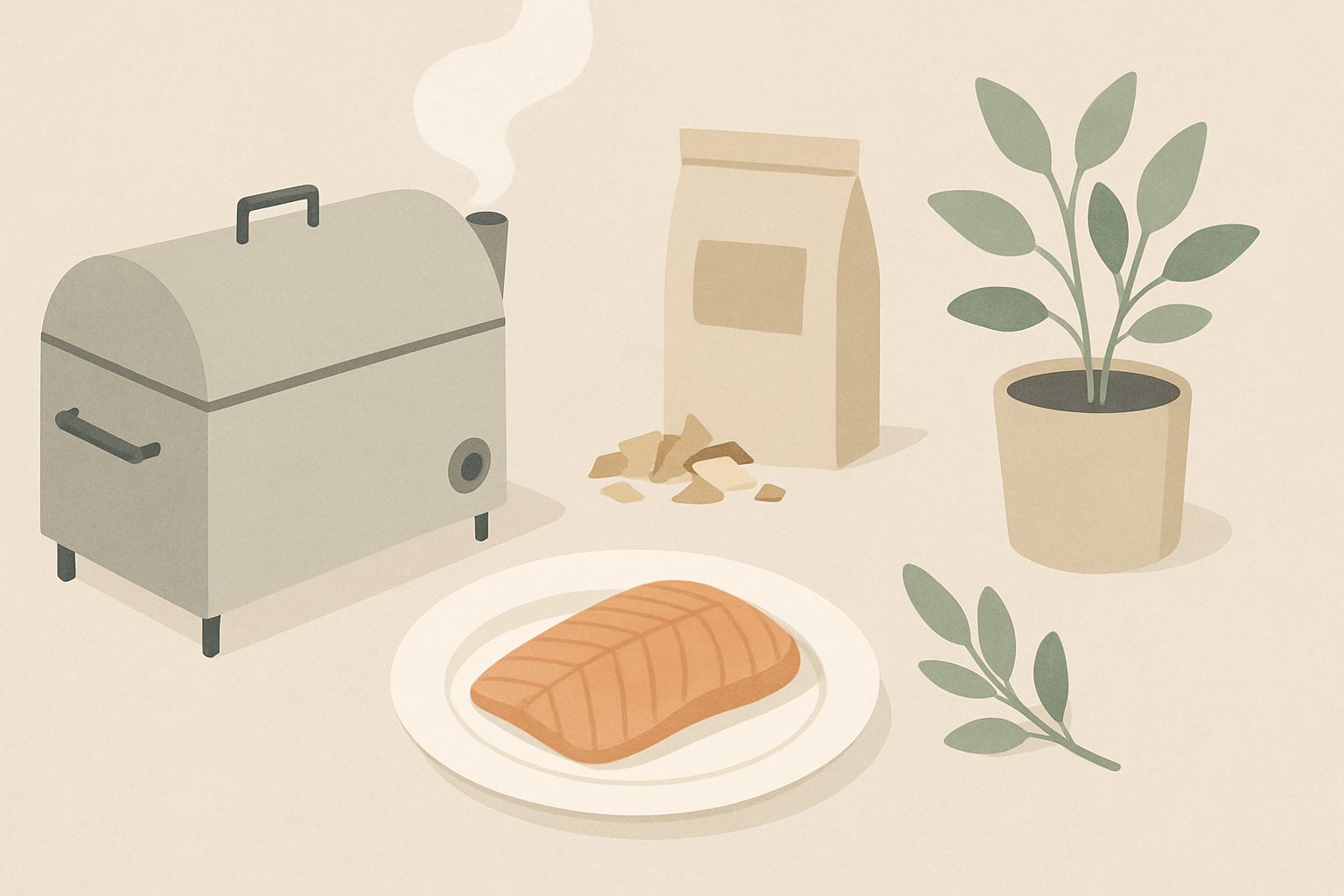
Best Smoker for Salmon & Fish UK 2025 – Cold and Hot Options
Smoking fish at home is a different beast from smoking meats. Salmon, trout, and mackerel need gentler heat or no heat at all—and wood choice matters far more than it does for pork or beef. If you're serious about cold-smoked salmon that rivals the shop-bought stuff, or hot-smoked fish that stays moist and tender, you'll need equipment designed for fish, not a generic barrel smoker.
This guide covers the two approaches that actually work in UK gardens: cold smoke generators for proper cured salmon, and dedicated hot-smoking setups that finish the job in hours.
Why Fish Smoking Is Different
Fish flesh is delicate. It dries out fast if the temperature climbs above 30°C during the smoke phase, yet it needs enough time in the smoke to develop real flavour. That's why cold smoking and hot smoking are poles apart from the backyard barbecue methods that work for brisket.
Cold smoking is the traditional route: you cure your fish, then expose it to cool smoke for 12–24 hours. Hot smoking gets similar results in 3–4 hours by combining the smoke and gentle cooking in one step. Both produce different end results—cold smoked is translucent and sliceable; hot smoked is cooked through and flakes easily—so your choice depends on what you actually want to eat.
Cold Smoking: The Purist Route
A proper cold-smoking setup needs a smoke generator that produces thick smoke at room temperature, separated from the fish chamber by at least a metre of pipe or ducting to cool the smoke down.
The Hay Smoker generator—a small tube with a burning wooden block inside—is the UK standard. You load it with compressed hardwood sawdust, light the end, and it smoulders for 12 hours on a single burn. Feed it alder dust for salmon (the classic pairing), or oak for deeper flavour on trout. The smoke emerges cool enough to sit comfortably in your palm.
Pair this with a simple chamber: a converted fridge works brilliantly because it's insulated and has a fitted door. Some people use a cold-smoking box (wooden, around 60cm square), though these don't hold temperature as reliably through summer. A chest freezer with the thermostat removed also works, though it's overkill for the investment.
The catch: Cold smoking only works well October to April in the UK. Summer ambient temperatures push the smoke too warm, and your fish risks spoiling. You need proper space between smoke source and fish—ideally 1.5–2 metres of insulated pipe—which rules out tiny gardens.
Cost range: £100–200 for the generator, then whatever your chamber costs. If you've got an old fridge, you're set.
Hot Smoking: Faster and More Forgiving
A dedicated hot smoker is a contained box with a heat source, smoke source, and fish grate. Salmon and trout hot-smoke beautifully at 65–75°C over 3–4 hours, emerging golden-brown and fully cooked.
Look for models with a firebox below, a water tray to catch drips and stabilise temperature, and space for two or three racks. Stainless steel ones resist rust far better than painted steel in the UK damp. Some designs use a slide-in door and thermometer; others have removable racks that slide out the front, which is more practical.
The key difference from a general-purpose smoker: fish models usually come smaller (around 40cm tall) and narrower (30cm wide), because you're not packing in a full brisket. This footprint fits a standard garden shed or even a garage corner.
Temperature control matters. Some hot smokers heat unevenly. Cheaper models leave you fiddling with vents and charcoal amounts to hold 70°C steady. Mid-range models (£200–350) with built-in thermometers and adjustable dampers make this almost automatic. Higher-end stainless drums (£400+) maintain temperature within 5°C without fuss.
Wood choice still matters: alder is softer, burns cooler, and lets the subtle salmon flavour shine through. Oak is stronger—great for mackerel or trout if you want assertive smoke. Don't use pine or other softwoods; they taint the fish with resin.
Fish-Specific Wood Choices
Alder is the traditional choice for salmon across Scandinavia and Scotland. It imparts almost no bitterness and won't overpower delicate white fish. Most UK suppliers now stock alder dust specifically for smoking—it's worth paying the premium.
Oak suits mackerel, herring, and trout. It's sweeter than alder but more assertive. Oak dust or chips are easier to find and cheaper than alder.
Avoid: beech (too mild), birch (slightly bitter), walnut (intensely bitter), and anything that's been treated or painted.
Practical Setup for UK Gardens
Cold smoking takes up less actual equipment space but demands a longer setup if you're building ducts and chambers from scratch. Hot smoking is simpler to install—place it, light it, monitor the temperature—but takes up more visual garden real estate because it looks like a barrel.
If you're a flat-dweller or renting, a tabletop hot smoker is worth considering. They're smaller (around 25cm square), won't upset neighbours, and produce excellent salmon in 2–3 hours.
What You'll Actually Need
Beyond the smoker or generator itself, you need:
- Meat thermometer (essential; a cheap dial one is fine)
- Curing salt and sugar for the prep stage
- Wood dust or chips (buy fish-specific, not BBQ blends)
- If cold smoking: some form of chamber and insulated ducting
The preparation—brining and curing—takes longer than the smoke itself and makes more difference to results than most people expect.
Getting Started
Start with hot smoking if you're new to it. Results arrive in an afternoon, the learning curve is gentler, and you can't ruin the fish through neglect. Once you've got the hang of temperature control and wood flavour, moving to cold smoking is straightforward—and produces the kind of sliceable, shelf-stable salmon that justifies the garden real estate.
For detailed guidance on the curing and smoking process itself, see our full salmon smoking how-to article—it walks through timings, salt ratios, and how to judge doneness by sight and feel.
More options
- ProQ Cold Smoke Generator (Amazon UK)
- Masterbuilt Electric Smoker Cabinet (Amazon UK)
- Bradley Smoker Original 4-Rack (Amazon UK)
- Angus & Oink Wood Chip Variety Pack (Amazon UK)
- Inkbird Wireless Meat Thermometer (Amazon UK)